
How to Grow Forget-Me-Not Flowers

The Charming Little Forget-Me-Not Is Loved All over the World. Its Tiny, Bright Blue Flowers Are Enchanting When Grown in Profusion. These Darling Flowers Also...
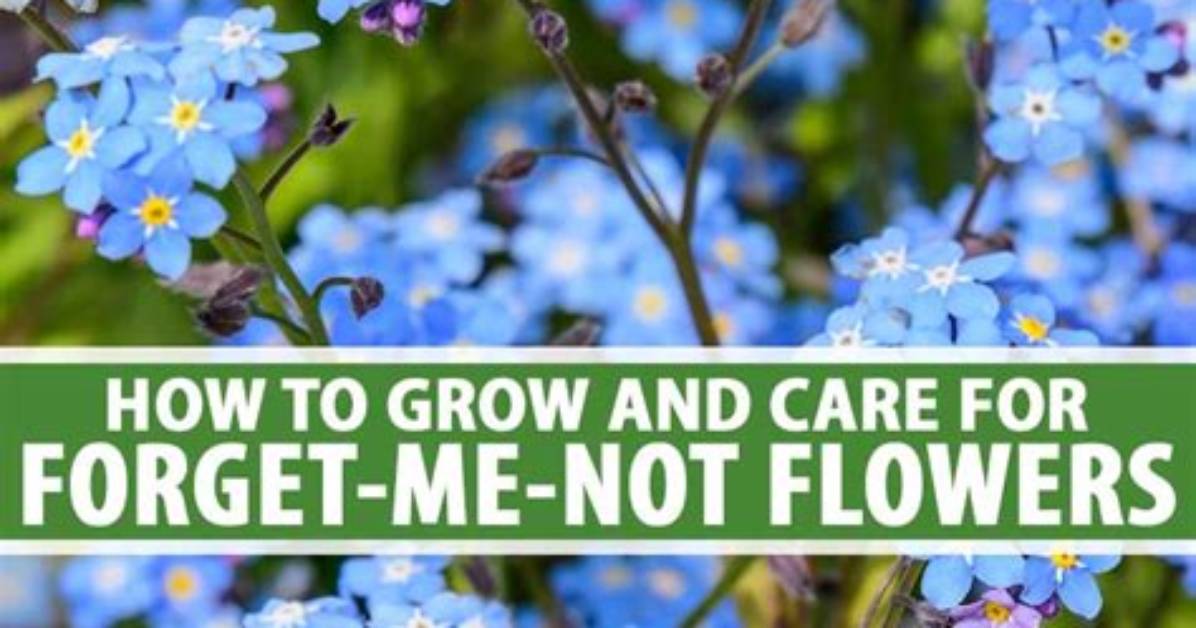
The charming little forget-me-not is loved all over the world. Its tiny, bright blue flowers are enchanting when grown in profusion. These darling flowers also may be pink or white.
They make a wonderful addition to cottage gardens, at the front of borders and in containers. Butterflies and other pollinators love them, and bunnies and deer tend to leave them alone. (Here are 29 other flowers that attract butterflies.)
Forget-me-not (Myosotis spp) is the common name used for several different species of this plant. But not all species of forget-me-nots are a good choice for home gardens.
Some types of forget-me-nots have become problematic. These types are not native to the U.S. and aggressively self-seed. They can take over whole gardens quickly and will crowd out native species.
The most common non-native species is Myosotis sylvatica, which originated in Europe.
“This species is considered a garden escape and has naturalized in parts of the U.S. and Canada,” says Tess Kuracina, director of living collections and curator of herbaceous collections at the New York Botanical Garden.
“At the New York Botanical Garden, M. sylvatica is grown as an annual. The plants are ripped out at the end of the spring, before the seed ripens and drops,” says Kuracina.
“We make sure it is only grown in highly cultivated areas that are not close to sites that might facilitate its spread.”
But in some regions, M. sylvatica should not be planted. That includes states such as Wisconsin, which has declared it invasive, and in Missouri, which has declared it a noxious weed.
Another type of forget-me-not, Myosotis scorpioides, also is considered problematic in some states. Delaware has placed it on an invasive plant watchlist.
If you want to grow forget-me-nots, read the plant tag or seed package carefully before buying.
“If you’re going to grow these species, you need to make sure you are obtaining the seed or plants from a reputable source to avoid planting any of the invasive types,” says Daria McKelvey, supervisor for home gardening and outreach at Missouri Botanical Garden.
Read on to learn more about how to care for forget-me-nots:
Forget-Me-Not Basic Info
Common Name: Forget-me-not
Botanical Name: Myosotis spp
Plant Family: Boraginaceae
Type of Plant: Herbaceous perennial
Native Origin: Europe or North America, depending on the species
Sun Exposure: Full sun to part shade
Mature Size: 1/2 to 1 foot tall, 6 to 10 inches wide
Toxic to pets: No
What Do Forget-Me-Nots Symbolize?
These tiny blue flowers have been popular in folk tales and art for centuries, and are associated with both love and rememberance.
The flower’s association with love date to the Middle Ages with a folk tale from Germany. The often-repeated tale comes from a story about a lover or knight and his lady. The tale ends with the knight falling into a river and drowning. As he does, he calls out, “Forget me not!” and tosses his lover these flowers.
By Victorian times, the flowers often were used to communicate this message of remembrance and fidelity in the art of floriography, or using flowers a symbols. It’s a flower that’s often seen on Victorian Valentine’s Day cards.
Marcus Vance is a cybersecurity auditor and technology writer dedicated to educating the public about online safety, data privacy regulations, enterprise security, and emerging cyber threats.
