
How to Write an Sop (Standard Operating Procedure)

I Often Help Customers Automate Their Business Processes with Server Automation. I Start by Gathering Information About the Process. in Many Cases, People Do...
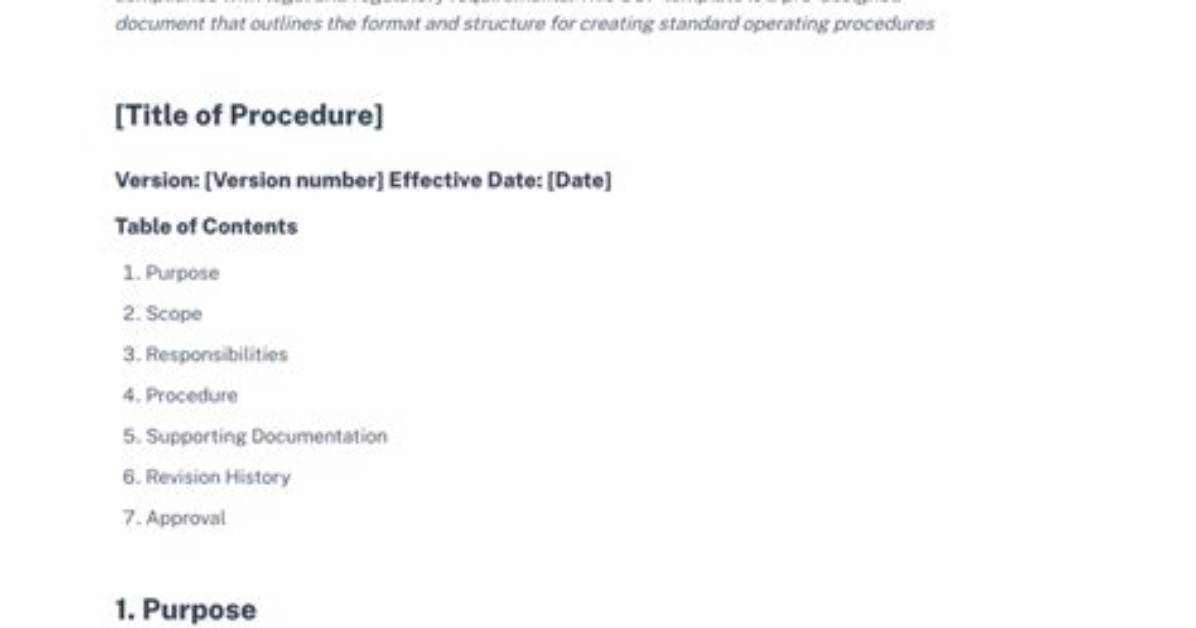
I often help customers automate their business processes with Server Automation. I start by gathering information about the process. In many cases, people do not know how the entire process works. They will know their step in the process very well, and everything goes smoothly—until it doesn’t.
For example, an employee leaves for vacation. Will their stand-in be able to complete the tasks? A new worker joins the company. How will they learn the process? A standard operating procedure, or SOP, makes it possible for work to continue smoothly in these scenarios. An SOP is also a go-to resource for when questions arise.
Businesses and teams of all types regularly find themselves in need of writing an SOP, or standard operating procedure. In this article, we’re exploring the basics of SOPs, including:
- Defining what SOPs are (and aren’t)
- Highlighting the benefits of SOPs and SOP libraries
- Outlining steps for writing your SOP
- Sharing best practices and real-world examples
What is an SOP?
When automating a business process, one of the first things I look for is an SOP. IBM defines an SOP simply as “a set of instructions that describes all the relevant steps and activities of a process or procedure.” It’s crucial that organizations know what is needed to complete certain tasks or processes, and an SOP offers that guidance.
An SOP lays out the tasks and roles needed to achieve a policy outcome. This removes the reliance on one person to know how to complete a task, or a set of related tasks. Anyone, then, can consult a single SOP or a group of related SOPs to determine what steps are needed.
Used correctly, an SOP describes in detail the implementation of a business policy. This includes:
- Fulfilling policy requirements such as regulatory policies, internal standards, and/or industry best practices.
- Mapping the applicable policy, standards, and practices to an explicit, step-by-step set of actions.
- Defining the goals that the process will accomplish, and breaking these into individual steps to achieve that goal.
- Assigning the roles responsible for carrying out each step.
Importantly, I like to highlight what an SOP is not: SOPs are unlike work instructions (WI) which contain specific instructions using specific tools. Work instructions flow from the steps of an SOP: an SOP describes “what” needs to be done, and WIs describe “how” it is done. (Read further for a real-world example of this difference.)
When and why to write an SOP
Broadly speaking, an SOP takes organizational policies, goals, missions, and visions and turns them into actions. The SOP gives tangible, real-world guidance to help put appropriate policies into place. In addition, it helps to provide consistency in how tasks are executed throughout an organization.
More specifically, there are a number of organizational benefits that SOPs offer:
- Help your organization meet compliance standards
- Adhere to schedules
- Simplify and maximize production/output
- Set safety standards
- Support training efforts
- Ensure business activities have no adverse environmental impacts
- Prevent organizational failures
Chloe Bennett explores the intersection of pop culture, streaming entertainment, digital trends, and contemporary lifestyle. Her weekly commentary reaches thousands of culture enthusiasts.
