
Seated Leg Curl Exercise | Technique & Common Mistakes

Whether You Do It Seated, or Lying Down, the Leg Curl Is One of the Best Ways to Isolate, Strengthen and Develop Your Hamstrings. the Seated Leg Curl Will Not...
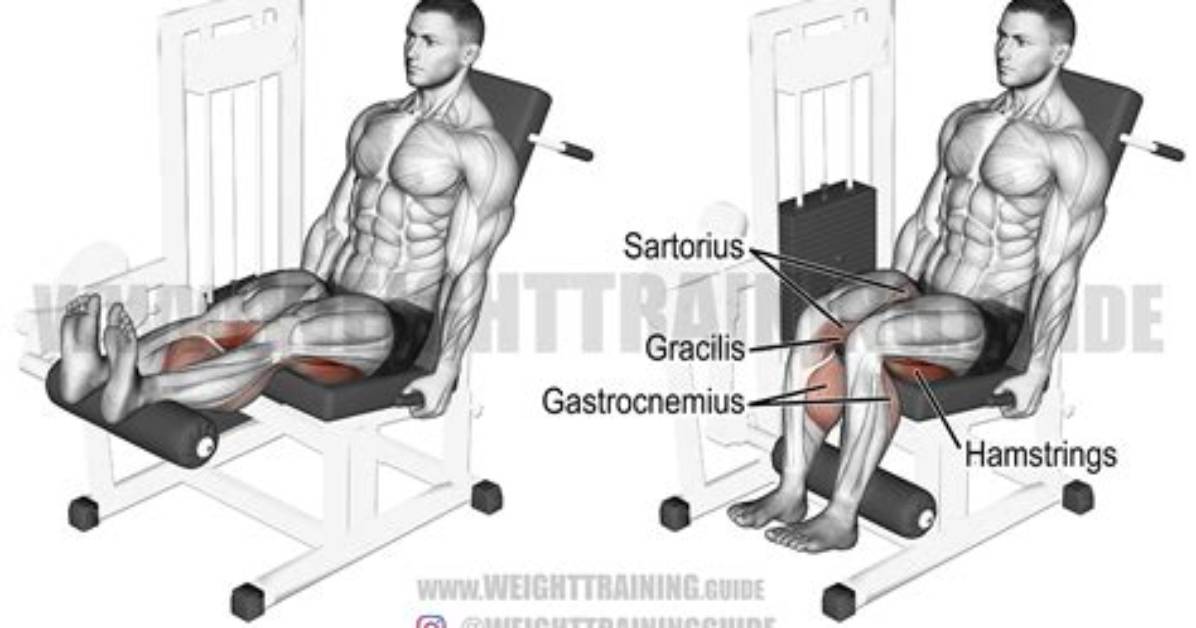
Whether you do it seated, or lying down, the leg curl is one of the best ways to isolate, strengthen and develop your hamstrings. The seated leg curl will not only increase your lower body strength, but it’s a great way to help prevent injury and improve your performance in other lifts and exercises.
Also known as the hamstring curl, it’s no surprise that it primarily works the hamstrings — one of three posterior muscles in between your hip and knee. Along with the glutes and calves, the hamstring provides key bodily functionalities, muscular stability and symmetry, as well as contributing significantly to athletic movements and performance.
The Anatomy of the Hamstring
Whilst it is commonly just known as the hamstring muscle, the hamstring is actually comprised of three muscles.
- Biceps femoris short head
- Biceps femoris long head
- Semimembranosus
All three play a vital role in movements such as squats, walking, running and essentially any lower body movements as these are the muscles that bend the knee during movements. Meanwhile, the biceps femoris long head and semimembranosus extend the hip joint in movements.
The Hamstring Curl | Seated Leg Curl Technique
- Take a seat on the machine with your back placed comfortably against the pad.
- Position your lower leg against the pad of the extended lever, adjust the lap pad so that it is securely holding your legs in position. The lap pad should be between the knees and the hip.
- Whilst your toes are facing forwards, make sure that your legs are levered in with the machine comfortably, but are also fully extended directly in front of you.
- Whilst breathing out (exhaling), flex your knees using just your hamstrings; this should pull the lever inwards. Continue to do so until the machine is pulled back far enough that it is almost hitting the back of your thighs.
- Throughout the movement, there should be no movement except your legs. Your upper body should be kept stationary throughout the entire movement.
- Ensure that your body is comfortable and stationary as doing otherwise could lead to lower back problems or hamstring strain.
- As the contraction is felt at the thigh muscle, squeeze and hold for a brief second before slowly (eccentrically) releasing back to the position you began with. Whilst you are doing so, inhale your breath as much as possible.
Chloe Bennett explores the intersection of pop culture, streaming entertainment, digital trends, and contemporary lifestyle. Her weekly commentary reaches thousands of culture enthusiasts.
